
Surface-specific cleaning
Quarry tile, ceramic tile, sealed concrete, and VCT each need different pads, brushes, and chemistry. We match the approach to the floor so you get deep cleaning without etching or leaving residue.
Serving Boston, Massachusetts & surrounding areas
Mon–Fri 8am–6pm Sat 9am–2pm
Restaurant floor cleaning in Boston
Degreased, slip-resistant floors help protect staff, pass inspections, and keep the kitchen and front-of-house looking sharp. Get a clear scope, after-hours scheduling, and consistent results.
Built for hard-working floors
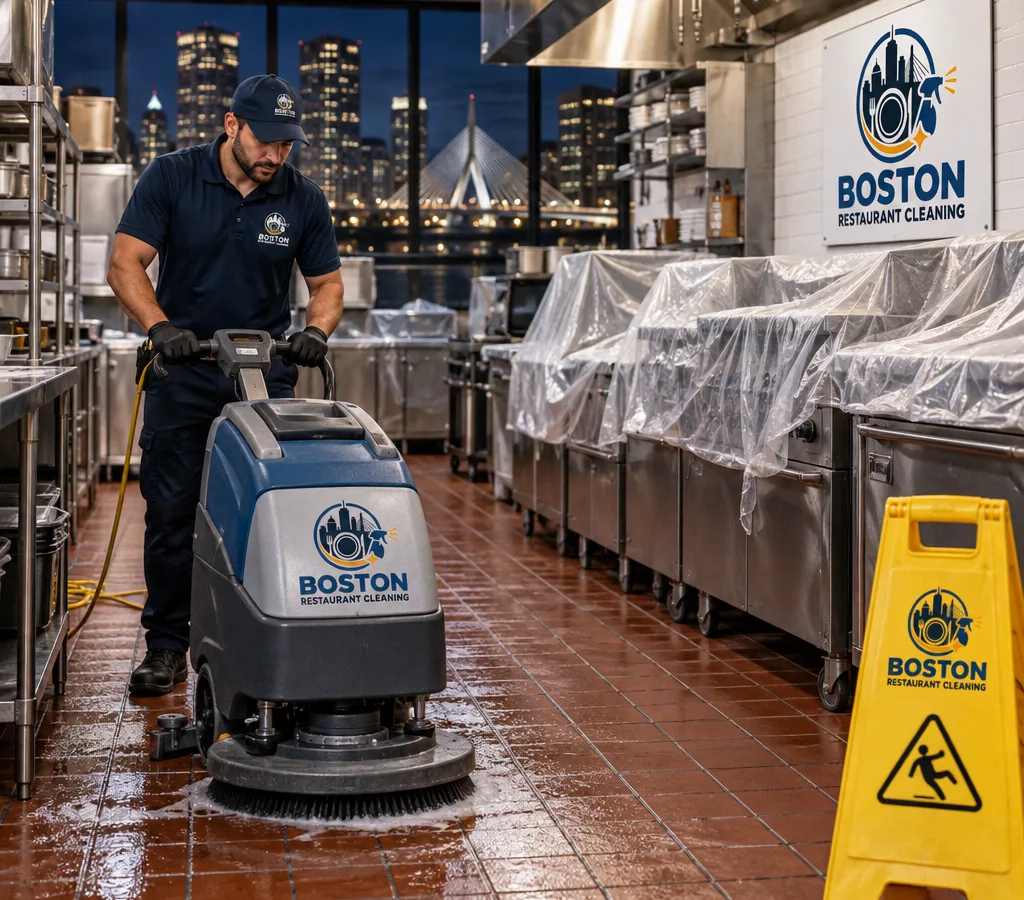
Boston Restaurant Cleaning provides Restaurant Floor Cleaning Services for kitchens and dining areas that take real abuse: fryer grease tracked across quarry tile, sugary drink spills at the bar, and gritty street salt residue at entrances during winter. We focus on the details that make floors safer and easier to maintain: removing built-up oils, restoring traction, and deep-cleaning grout lines where grime hides.
Our work is set up for restaurants that cannot shut down for long. We schedule around prep windows, slow days, and after-hours. We also work with the surfaces you actually have, including quarry tile, ceramic tile, sealed concrete, and VCT, using the right chemistry and tools for each so you get a clean floor without damaged finish or slick residue.
If you are comparing providers, you can expect a straightforward plan: what areas will be cleaned, how heavy the degreasing is, where we will detail by hand—baseboards, corners, and under mats—and what needs to dry before reopening. We operate from 15 Boston St, Suite 5, Boston, MA 02127 and serve restaurants across the city.
Grease removal that restores traction
Restaurant floor degreasing is different from routine mopping. In commercial kitchens, cooking oils polymerize under heat and foot traffic and turn into a sticky film that traps dirt. That film creates a slip hazard and makes floors look permanently dirty even right after a mop.
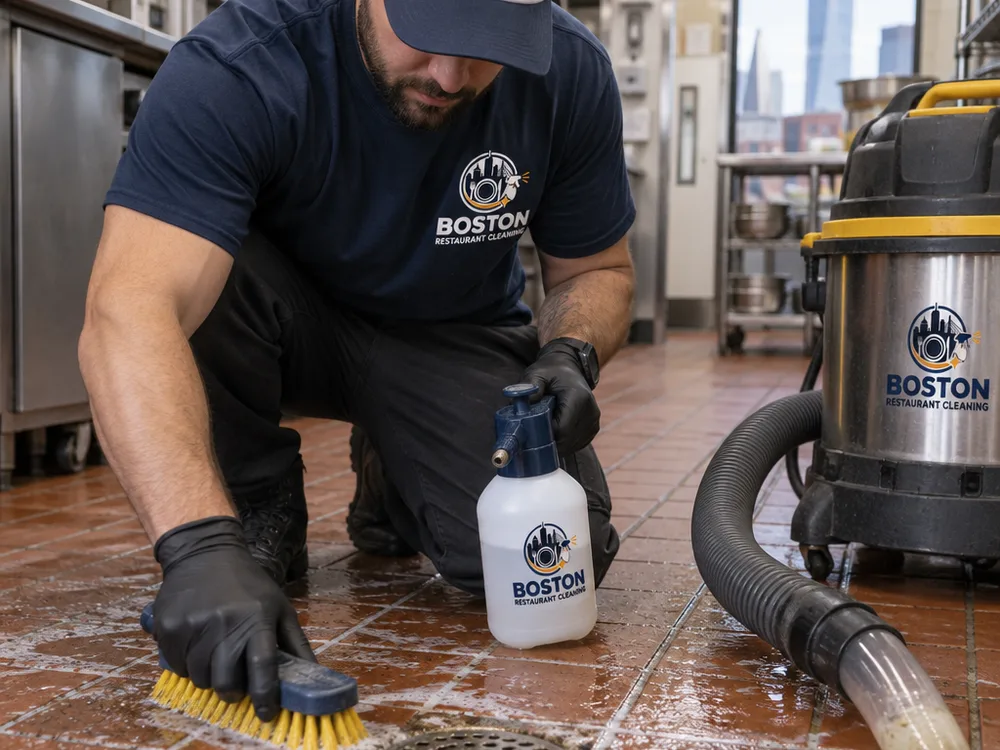
Our Kitchen Floor Degreasing process starts with an on-site look at soil load, floor type, and problem areas such as dish pit lanes, fryer lines, walk-in entries, and trash routes. We apply a commercial degreaser at the right dilution for the soil level, allow dwell time, then scrub using a rotary machine or cylindrical brush system depending on the surface profile. Edges, corners, and areas around floor drains often require detail work by hand. We recover slurry with a wet vac or autoscrubber recovery so grease-laden water is not pushed into grout lines.
For restaurants near high-traffic areas like Downtown Crossing or the North End, floors often collect additional grit and moisture tracked in from sidewalks, which can grind soils into grout. We account for that with a rinse step and controlled drying so the floor reopens with predictable traction.
A floor plan built around your operation
Quarry tile, ceramic tile, sealed concrete, and VCT each need different pads, brushes, and chemistry. We match the approach to the floor so you get deep cleaning without etching or leaving residue.
Degreasing targets the oily film that causes slips, especially in fryer and dish areas. We concentrate effort where traction matters most and keep rinse water controlled.
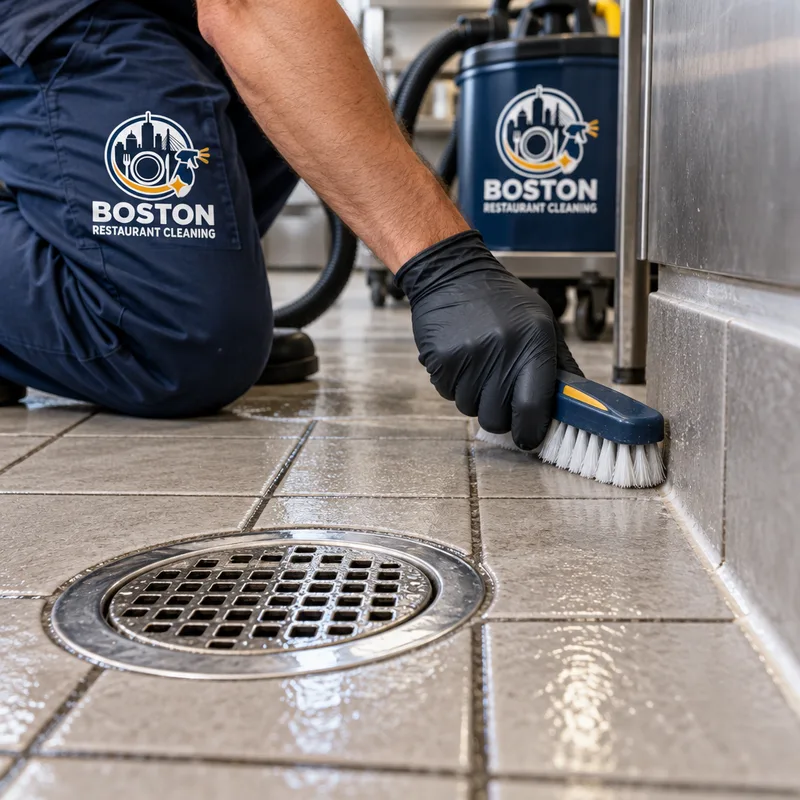
Corners, cove base edges, under mats, and around floor drains collect heavy soil. Those areas get hand detailing instead of a quick pass with a machine.
We plan for prep times and closing windows so your operation can keep moving. Dry times and re-entry expectations are part of the scope.
Many kitchens need periodic deep cleaning between daily mop work. We can set a cadence that keeps grease from rebuilding into a thick, hard-to-remove layer.
Deep cleaning beyond the tile face
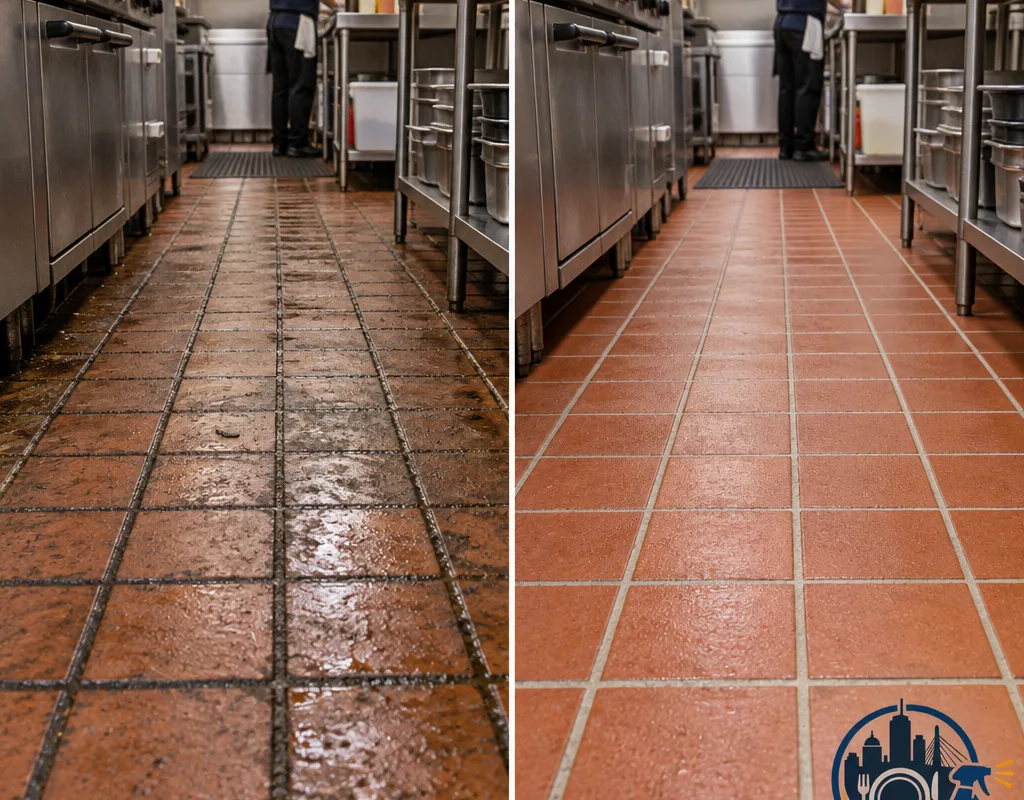
Tile can look fine while grout stays dark and greasy. That is because grout is porous, and in kitchens it absorbs oils and soils that a mop cannot lift. Restaurant Tile Cleaning is most effective when tile and grout are treated as a system: emulsify the grease, agitate it out of the pores, then rinse and recover it.
For Restaurant Grout Cleaning, we use a combination of dwell time, mechanical agitation, and controlled extraction. In areas that see constant moisture, including dish stations and bar service areas, we also pay attention to the rinse step so cleaning chemistry does not remain in the grout and attract new soil.
Common restaurant floor surfaces we handle:
If your operation uses broader cleaning coverage beyond floors, restaurant cleaning services in Boston can be coordinated so floor work fits your overall schedule.
A controlled floor-cleaning workflow
We identify floor types, grease load, and the highest-risk areas such as fryers, dish stations, walk-in entries, and bar mats. You get a written scope with timing and access needs.
We stage equipment, set safety signage, and protect nearby surfaces as needed. Light items and mats are moved so the full floor can be cleaned.
We apply degreaser with proper dwell time, machine-scrub the open areas, and detail by hand at edges, corners, and around drains where buildup is heaviest.
We rinse to remove emulsified oils, then recover slurry with wet-vac or autoscrubber recovery so soils do not settle back into grout lines.
We speed dry where possible and do a final check for missed edges or slick spots. You get clear guidance on when the floor is ready for normal traffic.
Planning your scope
Restaurant Floor Cleaning Services in Boston typically run about $300 to $1,200 per visit, depending on square footage, grease load, and whether the scope includes grout line detailing. A small bar or café kitchen may land on the lower end, while a larger commercial kitchen with heavy fryer traffic, multiple rooms, and quarry tile degreasing is commonly higher.
Final pricing changes with access, including after-hours windows, the number of problem zones such as dish, fry, and walk-ins, floor type, and how much hand-detailing is required around edges and drains. The exact cost is confirmed after an on-site walkthrough and scope review.
Results across the restaurant
Questions before scheduling
Most Commercial Kitchen Floor Cleaning jobs take 2 to 6 hours depending on square footage, grease load, and how much grout detailing is needed. A small kitchen may be finished in a short after-hours window, while larger kitchens with multiple zones need more time for dwell, scrubbing, rinsing, and drying.
Yes, quarry tile can be deep-cleaned without leaving a slick film when the process includes proper rinse and recovery, not just scrubbing. The key is removing the grease-laden slurry from the surface and grout lines so residue does not dry back onto the floor.
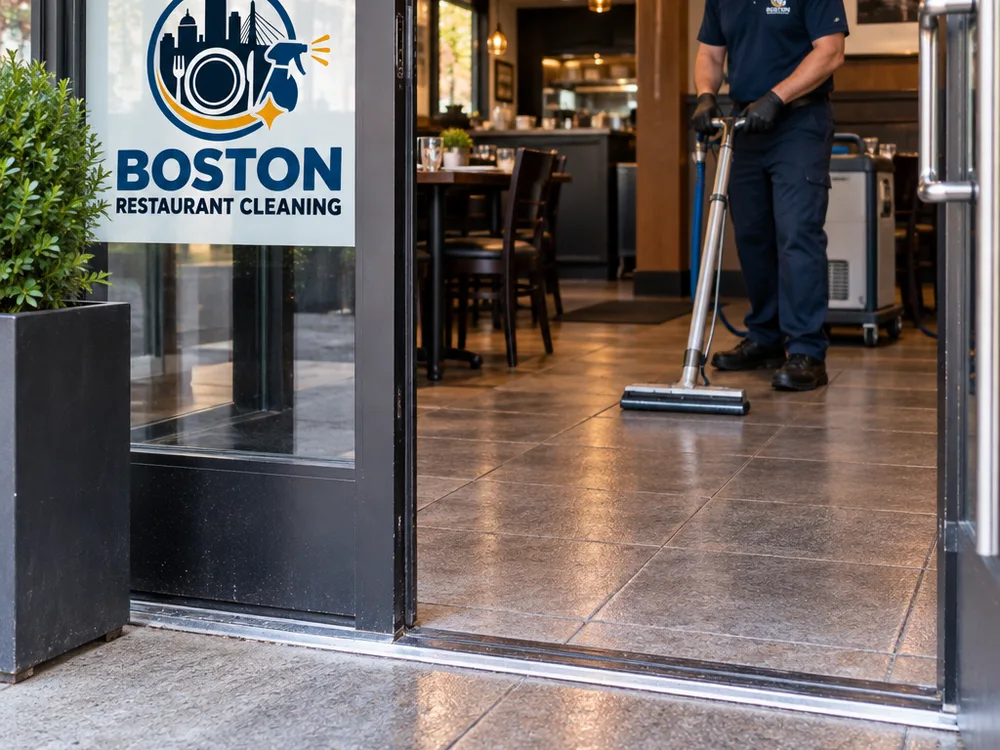
Yes, Restaurant Tile Cleaning and Restaurant Grout Cleaning can be included for front-of-house areas, restrooms, and entries along with the kitchen. Dining areas often need focus on sticky beverage spills and tracked-in grit, while restrooms typically need grout line restoration and edge detailing.
We typically need access to the areas being cleaned, a plan for moving floor mats and light items, and confirmation of the cleaning window so the floor can dry before staff returns. During the walkthrough we also note any floor-finish concerns, such as VCT finish, so we choose the correct pads and chemistry.
Most kitchens benefit from periodic Restaurant Floor Degreasing on a repeating schedule because daily mop work cannot remove the polymerized oil layer. Frequency depends on volume and menu style: fryer-heavy lines and dish corridors usually need attention sooner than dry storage or low-grease prep areas.
Yes, we include detailing around floor drains, corners, and cove base edges because those areas collect the heaviest buildup and are often missed by routine scrubbing. We treat them with targeted degreaser, agitation, and controlled rinse so grime is lifted out rather than spread.
Tell us your hours, floor type, and the worst problem areas. We will recommend the right Commercial Kitchen Floor Cleaning plan for your Boston location and schedule it around service and prep.